
How Long Do Sphynx Cats Live?
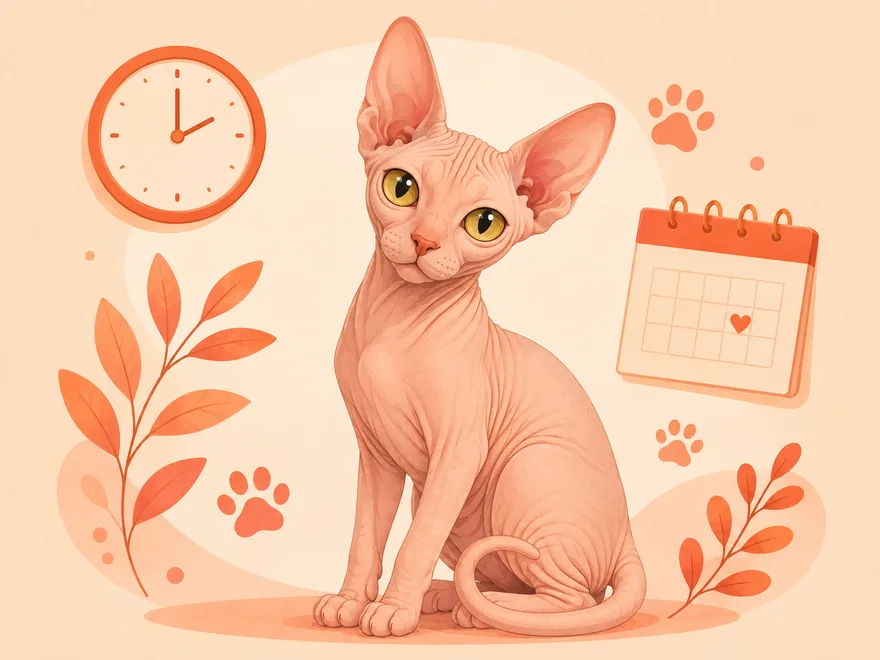
Sphynx cats typically live 8 to 14 years. Their lifespan is shaped less by their hairlessness than by an elevated rate of heart disease (hypertrophic cardiomyopathy), so early veterinary heart screening, attentive skin care, and keeping them warm are the main levers for helping a Sphynx reach the upper end of that range.
How long do Sphynx cats live?
Sphynx cats typically live 8 to 14 years, which places them slightly below the average for indoor cats. The factor that pulls hardest on that range is heart disease, not their lack of fur. For context, indoor cats overall average 12 to 18 years, with some reaching 20, so the Sphynx range sits modestly below typical indoor longevity. A 2024 UK study (Teng et al.) found the Sphynx had the shortest life expectancy at birth of any breed analyzed, at 6.68 years, versus 11.7 years for UK cats overall. That figure is a primary-care average that includes early deaths, which is exactly why the heart screening below matters so much. The 8 to 14 figure reflects what an attentive owner can reasonably expect. You can see how the Sphynx compares with other cat breeds in our full lifespan chart.
Heart disease is the main longevity factor
The leading threat to a Sphynx's lifespan is hypertrophic cardiomyopathy (HCM), a thickening of the heart muscle. It is the most common heart disease in cats, and the Sphynx is one of the most predisposed breeds.
- HCM is the most common heart disease of cats, and Cornell names the Sphynx among the breeds with elevated prevalence.
- A genetic mutation (ALMS1) is associated with HCM in the Sphynx and has been identified in about 60 percent of affected cats, with incomplete penetrance: carriers may stay healthy, and some affected cats lack the mutation.
- Onset is typically 2 to 3 years of age, though some cats do not develop it until 8 to 10 years.
- A veterinary cardiologist can detect muscle thickening on an echocardiogram, often before symptoms appear, so annual heart screening from young adulthood is the standard recommendation.
Skin care and staying warm
A Sphynx's hairlessness does not shorten its life on its own, but it does create daily care needs that lead to skin and comfort problems if neglected.
- With no coat to absorb skin oils, Sphynx cats need regular bathing, commonly about weekly, to prevent oil buildup, clogged pores, and skin irritation.
- They sunburn and chill easily, so they need warmth (sweaters, warm bedding, indoor-only living) and protection from direct sun.
Sphynx life stages
Cat aging follows the same human-equivalent math for every breed, so a Sphynx ages on the standard feline timeline. What is breed-specific is when to watch for its particular risks across the six feline life stages.
- Kitten and Junior (under 3 years): establish a vet relationship; baseline heart screening can begin in young adulthood.
- Adult (3 to under 7): prime years, but also the window when HCM most commonly first appears, so annual cardiac checks matter most here.
- Mature (7 to under 11): continue heart monitoring and weight management at a body condition score of 4 to 5 of 9.
- Senior (11 to under 15) and Geriatric (15 and up): a Sphynx reaching this stage is at the upper end of its range. Guidelines class any cat as senior at about age 10, so increase vet visit frequency.
Helping your Sphynx live longer
A Sphynx's lifespan is meaningfully within an owner's influence, and the most important step is early, ongoing heart screening.
- Schedule annual veterinary heart screening (an echocardiogram) from young adulthood.
- Bathe and check the skin regularly, keep the cat warm and indoor-only, and protect it from direct sun.
- Maintain an ideal body condition, keep up dental and routine care, and spay or neuter your cat.
Frequently asked questions
How long do Sphynx cats live?
Sphynx cats typically live 8 to 14 years. With early heart screening, good skin care, and an indoor life, many reach the upper end of that range.
What do Sphynx cats usually die from?
The leading cause is hypertrophic cardiomyopathy (HCM), a thickening of the heart muscle. It is the most common heart disease in cats, and the Sphynx is one of the more predisposed breeds.
Do Sphynx cats have more health problems than other cats?
They face two breed-linked concerns: an elevated rate of heart disease (HCM) and daily skin and temperature needs from having no fur. Neither is unavoidable, but both call for proactive care.
Can a Sphynx cat live to 15 or older?
It is possible but above the typical 8 to 14 range. The best odds come from regular veterinary heart screening starting in young adulthood, weight control, and consistent skin care.
When should a Sphynx be screened for heart disease?
Many vets recommend annual cardiac screening (an echocardiogram) starting in young adulthood. HCM most often first appears between 2 and 3 years of age, though it can show up as late as 8 to 10 years.
Does a Sphynx's hairlessness shorten its life?
Not directly. The lack of fur creates care needs (bathing, sun protection, keeping warm), but it is heart disease, not hairlessness, that most affects Sphynx longevity.
How often should you bathe a Sphynx cat?
Because their skin oils are not absorbed by fur, Sphynx cats usually need regular bathing (commonly about weekly) to prevent oil buildup, clogged pores, and skin irritation.
How old is my Sphynx in human years?
Cat-to-human age math is the same for every breed. You can convert your Sphynx's age instantly with our cat age calculator.
Sources
- Cornell Feline Health Center, College of Veterinary Medicine, Cornell University. Hypertrophic Cardiomyopathy. vet.cornell.edu
- NC State University College of Veterinary Medicine. Sphynx Hypertrophic Cardiomyopathy (HCM). cvm.ncsu.edu
- Teng KT, et al. “Life tables of annual life expectancy and risk factors for mortality in cats in the UK.” Journal of Feline Medicine and Surgery, 2024.
Written by the Cats Age Calculator editorial team · How we research & fact-check