
How Long Do Ragdoll Cats Live?
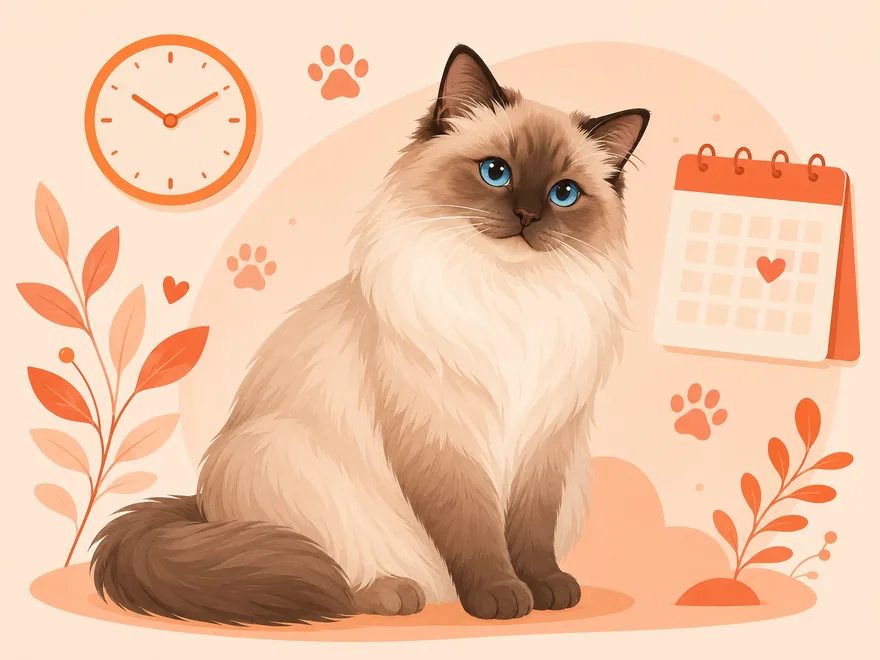
Ragdoll cats typically live 12 to 17 years, and many indoor Ragdolls reach 18 or beyond with good care. UK veterinary records put the median age at death at roughly 12.85 years. The breed's main longevity factors are heart disease (HCM), kidney disease, and weight control, not its large size.
How long do Ragdoll cats live?
Ragdolls typically live 12 to 17 years, which places them in the normal range for a medium-to-large pedigree cat. UK VetCompass primary-care data put the median age at death at about 12.85 years, with some Ragdolls reaching the early twenties. Indoor living with attentive care pushes many toward the upper end of the range and beyond. Importantly, size is not a shortening factor in cats: a large Ragdoll is not expected to die younger the way a giant-breed dog would, because cat age math has no size adjustment. You can see how Ragdolls compare with other cat breeds in our full lifespan chart.
What affects a Ragdoll's lifespan?
The biggest influences on a Ragdoll's lifespan are a handful of specific health risks plus body weight, none of which are about coat or size. Knowing them lets owners catch problems early.
- Hypertrophic cardiomyopathy (HCM). The breed's signature concern, linked to a breed-specific MYBPC3 gene mutation. It is often diagnosed young, commonly between 1 and 2 years of age. A DNA test plus echocardiogram screening identifies at-risk cats.
- Kidney disease. Kidney disorder was the most common recorded cause of death in the VetCompass Ragdoll study, at about 21 percent, which is why senior kidney monitoring matters.
- Obesity. Common in the breed and easy to miss under a plush, muscular frame. Excess weight feeds diabetes, joint strain, and heart disease, so aim for a body condition score of 4 to 5 of 9.
- Everyday care. Dental disease and other routine issues affect quality of life. Spaying or neutering and regular vet checks support a longer life.
Ragdoll life stages
Ragdolls pass through the same six feline life stages as any cat, but they mature slowly and stay kitten-like longer than most breeds, often not reaching full size and adult coat until around 3 to 4 years old.
- Kitten (under about 7 months) and Junior (about 7 months to 3 years): heart screening matters early, because HCM in this breed can appear in the young-adult years rather than only in old age.
- Adult (3 to under 7) and Mature (7 to under 11): prioritize weight checks and begin annual senior bloodwork, given the breed's leading causes of decline.
- Senior (11 to under 15) and Geriatric (15 and up): a Ragdoll enters its senior years around 11 on our scale, though guidelines class any cat as senior at about age 10.
Helping your Ragdoll live longer
Most of what extends a Ragdoll's life is preventable or screenable.
- Keep your Ragdoll indoors. Their docile, trusting nature makes them poorly suited to outdoor life, and the difference in indoor versus outdoor lifespan is large.
- Maintain an ideal body weight, since obesity is common and hidden by the coat.
- Screen for HCM with a DNA test and echocardiogram, and run senior kidney bloodwork from middle age onward.
- Keep up dental care, and spay or neuter your cat.
Frequently asked questions
How long do Ragdoll cats live on average?
About 12 to 17 years. UK veterinary records put the median age at death at roughly 12.85 years, and many indoor Ragdolls with good care reach 18 or more.
What do Ragdoll cats usually die of?
In a large UK veterinary study, kidney disorder was the most common cause of death (about 1 in 5), followed by a general decline in quality of life. Heart disease (HCM) is also a significant breed concern.
Do Ragdolls live longer than other cats?
Not especially. Their 12 to 17 year range is typical for a pedigree cat. Mixed-breed cats often live a year or two longer than purebreds thanks to greater genetic diversity.
Does a Ragdoll's large size mean a shorter life?
No. Unlike dogs, larger cat breeds are not expected to die younger because of size, and there is no size adjustment in cat age math. A Ragdoll's lifespan depends on genetics and care, not its frame.
What is HCM in Ragdolls?
Hypertrophic cardiomyopathy is a heart-muscle disease linked to a breed-specific MYBPC3 gene mutation. It is often diagnosed between 1 and 2 years of age. A DNA test and echocardiogram screening help catch it early.
Do indoor Ragdolls live longer than outdoor ones?
Yes. Ragdolls are docile and trusting, which makes them poorly suited to outdoor life. Indoor living protects them from traffic, predators, and disease, and is the standard breed-club recommendation.
At what age is a Ragdoll considered senior?
Cats are generally classed as senior around age 10 to 11. On this site a Ragdoll enters its senior years at 11 and is geriatric at 15 and up.
How can I help my Ragdoll live longer?
Keep it indoors, maintain an ideal body weight (obesity is common and hidden by the coat), keep up dental care, screen for HCM, and run senior kidney bloodwork from middle age onward.
Sources
- “Ragdoll cats under primary veterinary care in the UK.” Journal of Feline Medicine and Surgery (RVC VetCompass).
- NC State University College of Veterinary Medicine. Ragdoll Cat Hypertrophic Cardiomyopathy (HCM). cvm.ncsu.edu
- PetMD. Ragdoll breed health and longevity overview. petmd.com
Written by the Cats Age Calculator editorial team · How we research & fact-check