
How Long Do Domestic Shorthair Cats Live?
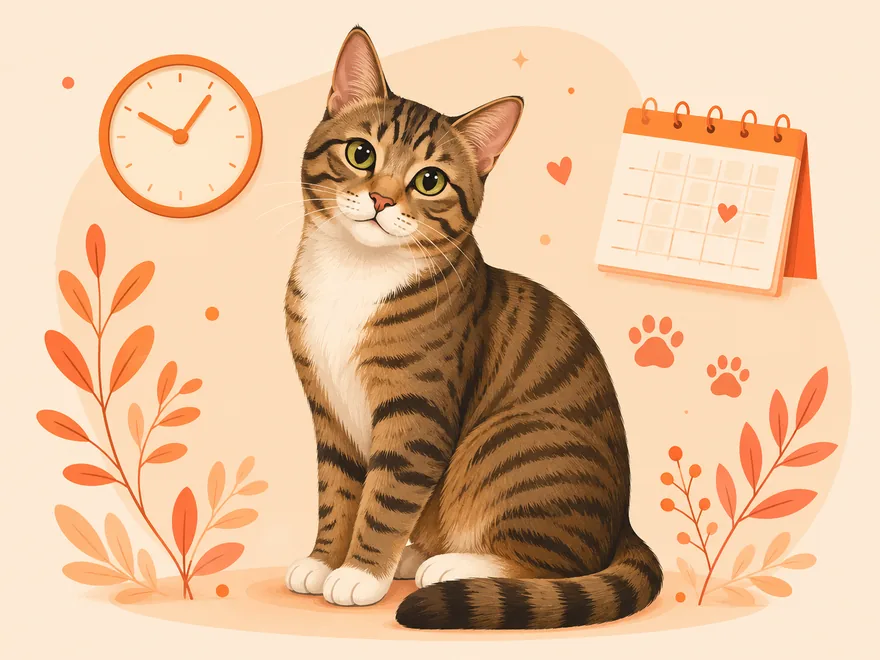
Domestic Shorthair cats typically live 12 to 18 years, and many indoor cats reach their late teens or even 20. Their mixed ancestry gives them broad genetic diversity (hybrid vigor), which lowers inherited-disease risk. Lifestyle matters most: staying indoors, a healthy weight, dental care, and regular vet visits push them toward the top of that range.
How long do Domestic Shorthair cats live?
Domestic Shorthair cats live an average of 12 to 18 years, and some reach 20 with good care. This is the same indoor-cat range the breed is known for, because the Domestic Shorthair is a mixed-ancestry house cat rather than a narrow pedigree line, sharing the same band as the Domestic Longhair. Indoor living anchors the longer end of the range, while outdoor-only life shortens it dramatically. One useful note: coat-pattern names like tabby, calico, tortoiseshell, and tuxedo are colors and patterns, not breeds. Those cats are Domestic Shorthairs (or Longhairs) and share this 12 to 18 year range. You can see how this compares with other cat breeds in our full lifespan chart.
Why Domestic Shorthairs are often so long-lived
Their broad mixed-breed gene pool reduces the inherited diseases that shorten many pedigree breeds, an effect called hybrid vigor. It is the main reason Domestic Shorthairs sit at the healthier end of the cat lifespan spectrum.
- A large, diverse gene pool dilutes the harmful recessive traits common in narrow pedigree lines.
- Mixed-breed cats tend to live modestly longer than purebreds for this reason.
- There are no breed-specific genetic time bombs, unlike the HCM-prone or flat-faced pedigree breeds.
- This is general resilience, not a guarantee. Lifestyle and care still decide the outcome.
What decides where your cat lands
Four things move a Domestic Shorthair toward the top of the 12 to 18 year range: indoor living, a healthy weight, dental care, and routine vet visits.
- Indoor versus outdoor. Indoor cats live far longer; outdoor-only cats average just 2 to 5 years, and indoor/outdoor cats roughly 7 to 12 years. See indoor versus outdoor lifespan.
- Weight. Obesity is the most common nutritional disorder in cats and worsens diabetes, arthritis, and joint disease, so aim for a body condition score of 4 to 5 of 9.
- Dental care. Dental disease is more common in older cats and can compromise eating and quality of life.
- Routine vet care. Vaccinations and twice-yearly senior checkups catch kidney disease, hyperthyroidism, and dental problems early. Spaying or neutering also adds years.
Domestic Shorthair life stages
Because cat age math is the same for every breed, a Domestic Shorthair moves through the standard feline life stages, and its mixed-breed health often lets it stay vigorous deep into the senior years.
- Kitten (under about 7 months) and Junior (about 7 months to 3 years): fast growth, vaccinations, and spay or neuter around 4 to 6 months.
- Adult (3 to under 7) and Mature (7 to under 11): prime years; watch weight as activity settles. By age 10, vets already class a cat as senior.
- Senior (11 to under 15) and Geriatric (15 and up): many Domestic Shorthairs are still thriving here, and well-cared-for cats commonly reach the geriatric stage.
Helping your Domestic Shorthair reach 18 and beyond
The moves that matter most are keeping your cat indoors, lean, and on a regular vet schedule. None are breed-specific, but they pay off especially well for an already genetically resilient cat.
- Keep the cat indoors or in a secure enclosure.
- Maintain an ideal body condition (4 to 5 of 9); measure food and avoid free-feeding.
- Provide dental care and schedule professional cleanings.
- Spay or neuter, and book twice-yearly vet visits from age 7 onward.
Frequently asked questions
How long do Domestic Shorthair cats live?
On average 12 to 18 years. Many indoor Domestic Shorthairs reach their late teens, and some live to 20 with good care.
Is a Domestic Shorthair an actual breed?
Not in the pedigree sense. It is a mixed-ancestry house cat, the most common cat in homes. That mixed gene pool (hybrid vigor) is exactly why it tends to be so healthy and long-lived.
Do Domestic Shorthairs live longer than purebred cats?
Often, yes. Mixed-breed cats tend to live modestly longer than purebreds because their broad genetic diversity lowers the risk of inherited diseases that shorten many pedigree lines.
Do indoor Domestic Shorthairs live longer than outdoor ones?
Significantly. Indoor cats land in the 12 to 18 year range, while outdoor-only cats average just 2 to 5 years and indoor/outdoor cats roughly 7 to 12 years, mostly due to traffic, predators, and disease.
What health problems shorten a Domestic Shorthair's life?
There is no breed-specific genetic disease, but the big risks are obesity (which worsens diabetes and arthritis), dental disease, and the senior conditions common to all cats, like kidney disease and hyperthyroidism. Keeping your cat lean and on a vet schedule matters most.
When is a Domestic Shorthair considered a senior?
Age-related changes can begin between 7 and 10, and vets classify a cat as senior by about age 10. The senior years run roughly 11 to 14, with geriatric beginning at 15.
How do I help my Domestic Shorthair live to 18 or beyond?
Keep it indoors, keep it at a healthy weight (body condition 4 to 5 of 9), spay or neuter, brush its teeth, and book twice-yearly vet visits from age 7 on.
My cat is a tabby (or calico or tuxedo). What is its lifespan?
Tabby, calico, tortoiseshell, and tuxedo are coat patterns, not breeds. Those cats are almost always Domestic Shorthairs (or Longhairs) and share the same 12 to 18 year range.
Sources
- PetMD. How Long Do Cats Live? petmd.com
- Cornell Feline Health Center, College of Veterinary Medicine, Cornell University. Obesity. vet.cornell.edu
- American Animal Hospital Association & American Association of Feline Practitioners. Feline Life Stage Guidelines.
Written by the Cats Age Calculator editorial team · How we research & fact-check